
Mental Health Commission
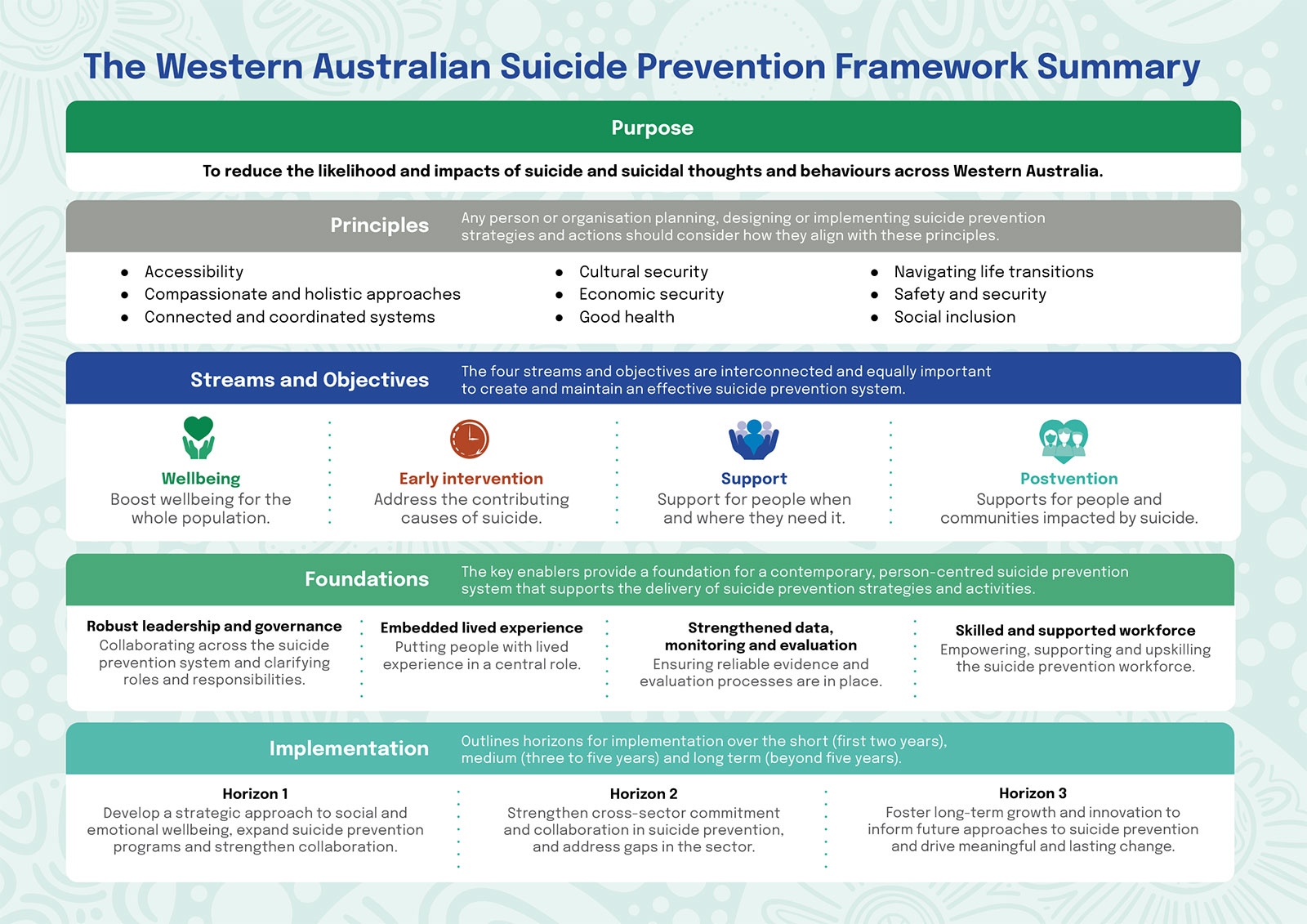
The Western Australian Suicide Prevention Framework 2026-2031 (Suicide Prevention Framework) outlines the State Government’s plan to reduce and prevent suicide in Western Australia.
Suicide has a devastating impact on the people, families and communities of Western Australia. In 2024, more than one person died by suicide every day, with many others exposed to suicidal distress or loss.
The Suicide Prevention Framework is for everyone. No one person or community can do it alone.
Download the Suicide Prevention Framework
The Suicide Prevention Framework provides guidance on applying a holistic, whole-of-community approach to preventing suicide in Western Australia, including ways to embed social and emotional wellbeing and suicide prevention approaches that are culturally safe and responsive to Aboriginal people and communities.
It describes the complex and intersecting factors that influence suicide and explores ways to reduce the risk of suicide for Western Australians across the four streams of Wellbeing, Early Intervention, Support and Postvention.
To ensure suicide prevention efforts meet the diverse needs of the Western Australian community, it is important to be guided by the evidence and people impacted by suicide. This means working alongside people with a lived experience of suicide, as well as engaging with groups disproportionately impacted by, or at higher risk, of suicide to understand what works. Actively listening to these voices is essential for the successful implementation of the Suicide Prevention Framework.
Implementation of the Suicide Prevention Framework will be monitored through Annual Implementation and Monitoring Plans (AIM Plans) developed as part of Mental Health, Alcohol and Other Drugs Strategy 2026-2031. The AIM Plans will highlight key achievements, challenges, next steps, and progress aligned to the Commission’s key actions. Aim Plans will be published on the Commission’s webpage.
Download the Suicide Prevention Framework Overview
If you have any questions or would like to discuss what the Suicide Prevention Framework means for you, please email suicideprevention@mhc.wa.gov.au.
Strategic Alignment
The Suicide Prevention Framework aligns with and has been informed by:
- the National Aboriginal and Torres Strait Islander Suicide Prevention Strategy 2025-2035, which sets a path for all governments to work in genuine partnership with Aboriginal and Torres Strait Islander people, organisations and communities and to drive culturally safe and responsive solutions to prevent and reduce suicide
- the National Suicide Prevention Strategy 2025-2035, which provides a strong foundation for the Suicide Prevention Framework, contextualised for Western Australia’s unique circumstances. It applies the latest research, evidence and reports to inform a broad approach to suicide prevention that builds on the work already happening in Australia
- the Western Australian Mental Health, Alcohol and Other Drugs Strategy 2026-2031, which sets the vision for mental health and alcohol and other drugs systems, services and supports in Western Australia for the next five years. The Suicide Prevention Framework directly supports the Mental Health Commission to meet Focus Area 3: Preventing and reducing suicide and reducing suicidal distress.
Language matters when talking about suicide
Suicide prevention is constantly evolving and so is the language and terminology used. While having a shared language is important, we recognise that language can vary across settings and sectors.
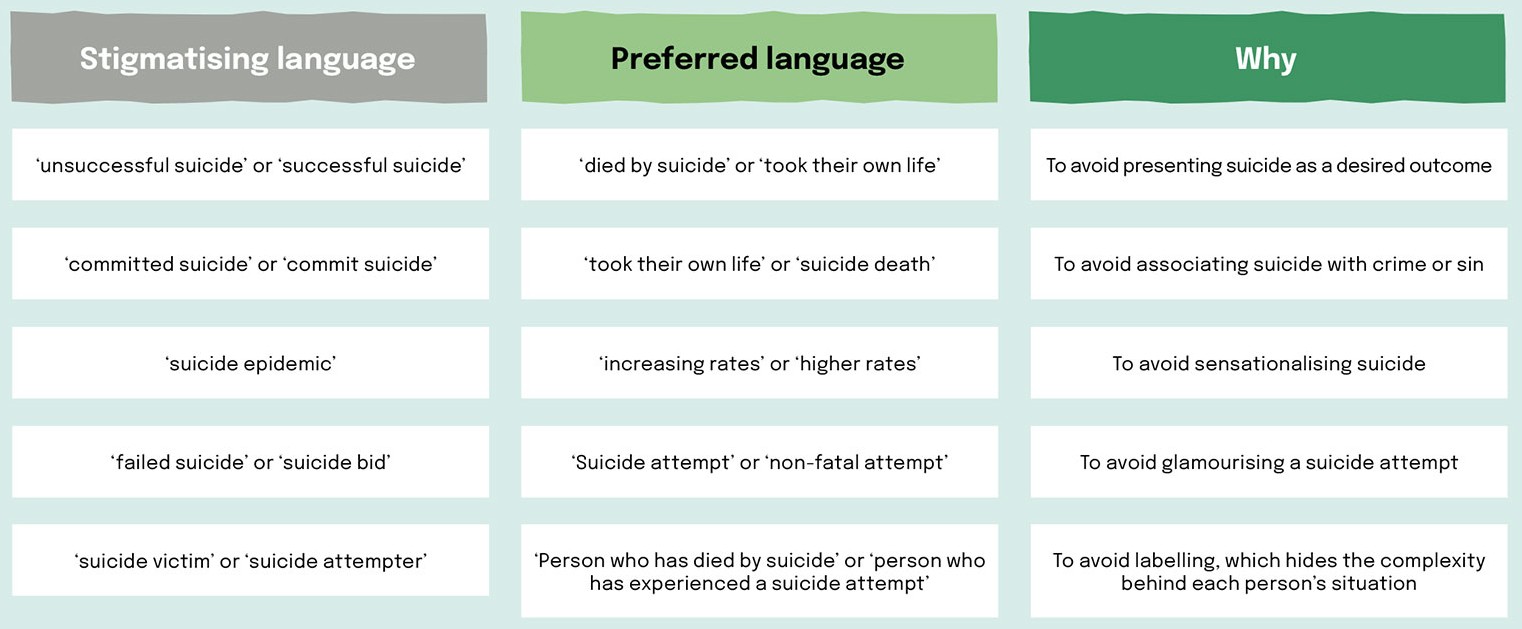
Using safe and inclusive language when talking about suicide can reduce stigma and discrimination, promote help-seeking and prevent negative stereotypes.
Examples of stigmatising language and preferred alternatives:
For more information on safe and inclusive language, refer to the Mindframe Guidelines. These national guidelines provide guidance to support safe and responsible communication about suicide. Other Mindframe resources include:
Page last updated18 November 2026